Showing posts with label I. Arduino: Introduction. Show all posts

Thursday, May 11, 2023

Importance of learning Arduino for electronics and programming enthusiasts

  1. Easy to Learn: Arduino's programming language is based on C++, but it uses a simplified syntax that is easy to learn and understand. This makes it accessible to beginners who may have little to no experience in programming.

  2. Hands-on Learning: Arduino is a platform for building physical prototypes and projects, which means you get to learn by doing. This hands-on approach can be a great way to solidify your understanding of concepts and ideas.

  3. Interdisciplinary: Arduino combines electronics, programming, and even design, making it an ideal platform for those interested in interdisciplinary work. This also means that you can use Arduino to create projects that solve problems in a wide range of fields, from robotics to art.

  4. Low-Cost: Arduino boards and components are relatively inexpensive, making it an affordable way to get started with electronics and programming. This accessibility means that more people can learn and experiment with Arduino, regardless of their budget.

  5. Community: Arduino has a large and active community of users who are always willing to help and share their knowledge. This means that you can learn from others, find answers to your questions, and even get feedback on your projects.

Overall, learning Arduino can be a rewarding experience for anyone interested in electronics and programming. Whether you're a hobbyist or a professional, Arduino can provide you with the tools and resources you need to bring your ideas to life. 

How Arduino works

 At its core, Arduino is a microcontroller platform that is designed to be easily programmed and interfaced with a wide range of electronic components. A microcontroller is essentially a small computer on a single chip that is dedicated to performing a specific task, such as reading sensor data or controlling a motor.

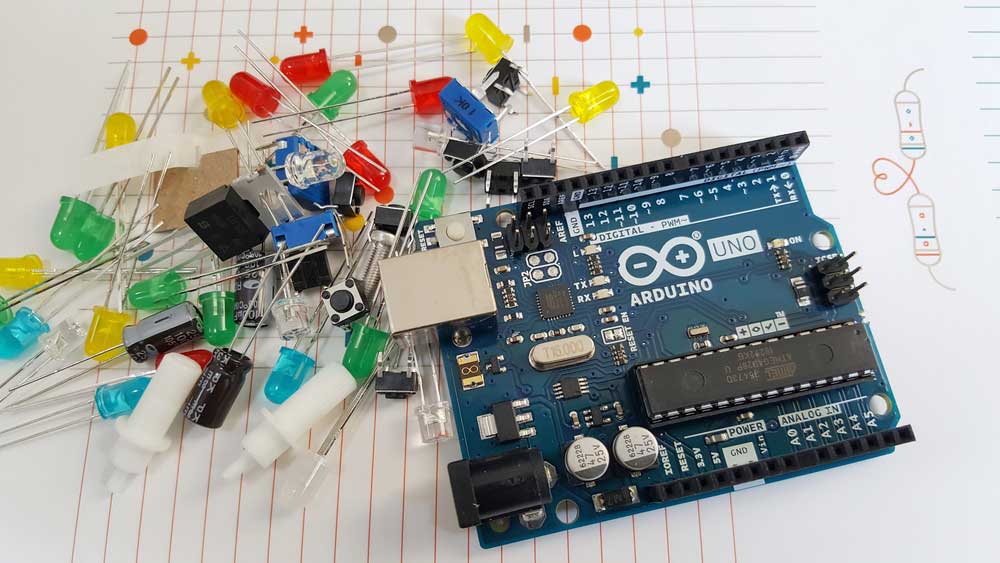
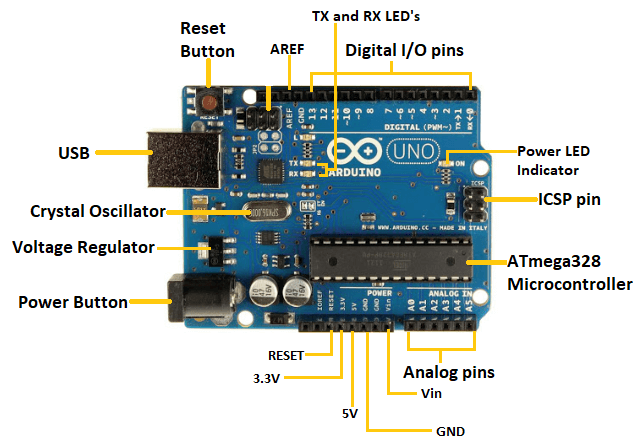
Arduino boards contain a microcontroller, along with other electronic components that allow it to communicate with other devices, such as USB ports, power regulators, and digital and analog input/output pins. These pins are what allow the Arduino to read input from sensors, control output to actuators, and communicate with other devices.

To program an Arduino board, you first write your code in the Arduino Integrated Development Environment (IDE), a software program that provides a user-friendly interface for writing, compiling, and uploading code to the board. The code is written in a variant of the C++ programming language, and can be easily modified and uploaded to the board.

Once the code is uploaded, the Arduino board executes the code, performing the actions that were specified in the program. For example, if the program instructed the Arduino to read data from a sensor and turn on an LED if the value exceeded a certain threshold, the board would read the data from the sensor, process it according to the program's instructions, and activate the LED if the threshold was exceeded.

The beauty of Arduino lies in its simplicity and versatility. With a basic understanding of electronics and programming, anyone can learn to create their own projects and prototypes using Arduino. The wide range of electronic components that can be interfaced with Arduino allows for endless possibilities, from basic LED projects to complex robotics and automation systems.

An Introduction of Arduino: What is it?


    Arduino is an open-source electronics platform that has gained immense popularity in recent years due to its versatility and ease of use. It is an affordable and accessible way for beginners to learn about electronics and programming, while also providing a powerful tool for more experienced users to create complex projects.

Arduino is an open-source electronics platform that has gained immense popularity in recent years due to its versatility and ease of use. It is an affordable and accessible way for beginners to learn about electronics and programming, while also providing a powerful tool for more experienced users to create complex projects.

Arduino boards are designed to be easily programmed and can interact with a wide range of sensors, actuators, and other electronic components. This allows for the creation of a vast array of projects, from simple blinking LED lights to more complex robotics projects, home automation systems, and even musical instruments.

Arduino

Are you interested in learning about electronics and programming, but don't know where to start? Look no further than Arduino! Arduino is an open-source platform used for building electronics projects. It consists of a programmable circuit board and software, and is easy to use even for beginners.

To get started with Arduino, all you need is a basic understanding of programming concepts and a desire to learn. There are plenty of online tutorials and resources available to help you get started. Once you have your Arduino board and software set up, you can start building projects such as LED lights, sensors, and robots.

One of the great things about Arduino is its versatility. You can use it for a wide range of projects, from simple ones like turning on an LED light, to more complex ones like building a drone. Additionally, there is a large community of Arduino enthusiasts who are always happy to help and share their knowledge.

In conclusion, Arduino is a fantastic platform for anyone interested in learning about electronics and programming. It's easy to use, versatile, and has a supportive community. So why not give it a try and start building your own electronics projects today?

Where to buy?

Introducing latest project powered by Arduino! Looking to bring your creative ideas to life? With our Arduino products, the possibilities ar...